
Blog · January 2024
'Tripledemic': Influenza, RSV and COVID Activity in Early 2024
By Uma Periyanayagam, MD
Right now, the news is filled with stories about the current 'Tripledemic'.
So many pandemic weary people are claiming it's their 'allergies' (probably not) as they go about their lives.
The good news? Things are starting to trend down in these early weeks of 2024 somewhat.
The bad? COVID has caused a lot of unprecedented changes, including to virus patterns we've been predicting accurately for the last 30–50 years, and the season isn't done YET, so we will have to see.
Right now, it's accounting for about 6.3% of ER visits within the last week (~Jan 6–12, 2024). Which is VERY slightly down, but still extremely high. Hospital beds are currently unavailable in large swaths of the country, once again. So much of this is due to the holidays — so many of us gathered together with our loved ones over Christmas/New Years break and shared more than Santa's cookies — it was probably the Flu, COVID, or RSV.
Oh no, not again! Yes, here we are. Live your life, but take precautions!
Part 1: Influenza
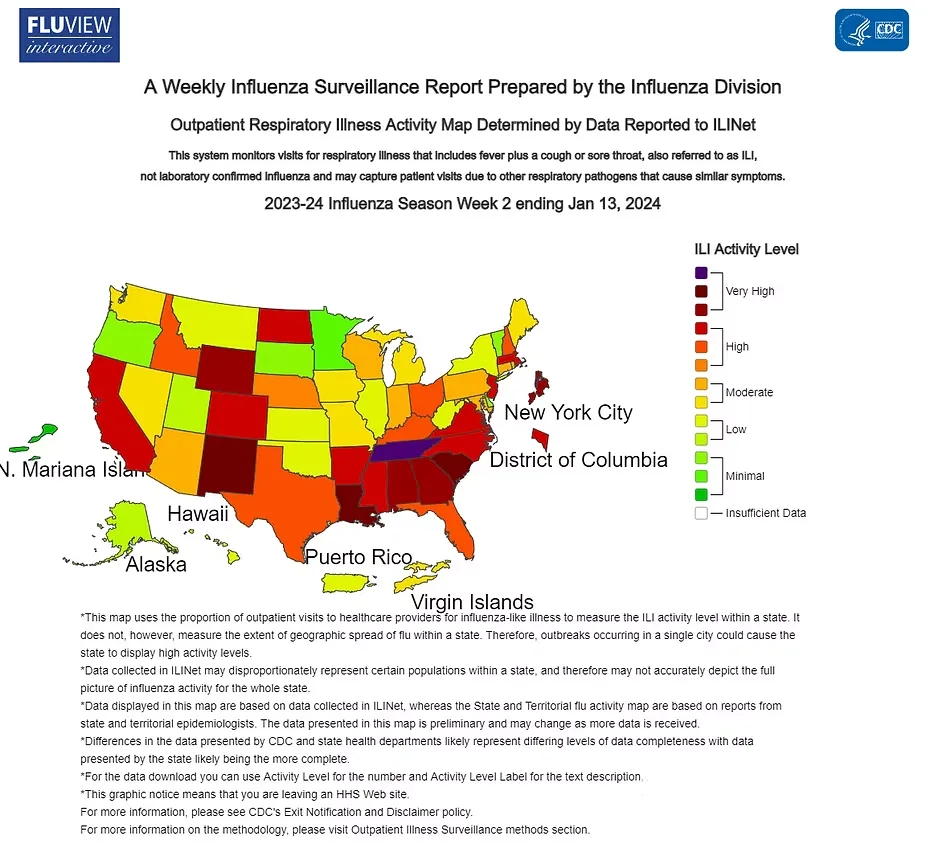
Of all the 'big 3', this definitely accounts for the highest amount of ER visits last week (3.3%).
Type A > Type B right now, with H1N1 and H3N2 being the most common strains.
Type B (Victoria and Yamagata lineages are the ones seen most so far, and most likely to be the ones surging IF it happens) usually comes around February or so, so there MIGHT be another mini surge.
However, many experts seeing downward trends believe resp activity has possibly spiked.
Let's hold our breaths y'all! Though not too much, we're clearly stuffed up with 'allergies' already. 😒
Influenza shots are generally between 40–60% efficacious in preventing disease, and this year, SO FAR, it has been shown to reduce the risks of influenza associated hospitalizations by a little over 50%.
Most often, because children have less reserve and general exposure to Influenza, they're the most likely to get sick from it. So far this year, they've accounted for a large share of sick visits for the flu.
Treatment is generally Tamiflu, must be given within the first 48 hours of symptoms, it usually shaves 1–2 days off. Dosage and length of time depend on whether you're using it for chemoprophylaxis (fancy word for: someone near you is exposed and we're trying to prevent it). It is often not needed for those who are otherwise healthy, though it really depends on age and other specific medical conditions — those <2 and over 65 generally should really get it.
There are other IV and intranasal medications available on the market, called Peramivir and Zanamivir, though I got to admit I'm not too familiar with them (and won't assume compliance in children will be an easy thing to obtain as a Pediatrician, so many of us stick with what we know). Zanamivir can also only be used in patients 7 and up.